
SanDisk
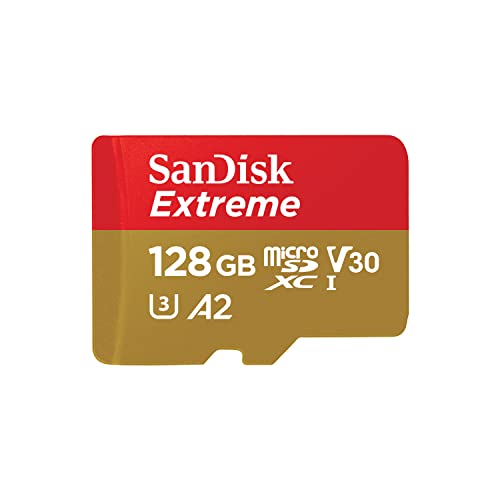
Extreme 128GB microSDXC
$37.99
Pros & Cons
Pros
- Fast U3/V30 write speed handles 4K trail-cam video without dropped frames
- 128GB holds thousands of photos so you check the card less often
- Full-size SD adapter included for reading on any laptop
- Trusted SanDisk reliability in the field through heat and cold
- Cheap insurance against the throwaway cards bundled with cameras
Cons
- Standard Extreme line, not the high-endurance card — fine for trail use but not 24/7 security recording
- Confirm your camera's max supported capacity before buying
At a Glance
Overview
The SanDisk Extreme 128GB microSDXC is the most boring purchase you'll make for a trail camera, and quietly the one most likely to save your season. It's the card I default to in every SD, WiFi, and cellular camera I run, because the memory card is the single component that turns a working camera into a useless box — and the cheap, no-name card bundled with a budget camera or sold three-for-ten-dollars online is the most common reason a trail cam comes back empty.
The spec shorthand on this card — U3, V30, A2, 128GB, with an SD adapter in the box — translates to fast, reliable write speeds that keep up with 4K video and rapid-fire photo bursts, plenty of capacity to skip frequent card pulls, and a name you can trust to survive heat, cold, and months on a tree. At around its current street price it's cheap enough to buy one per camera, which is exactly what I recommend.
There's an honest nuance worth stating: the Extreme line is a fast, high-quality consumer card, not SanDisk's dedicated High Endurance line built for continuous 24/7 recording. For normal trail-cam use — motion-triggered stills and clips, even a lot of them — the Extreme is the right tool and the High Endurance distinction won't matter. If you're running a camera in near-continuous video security mode, that's the one case to consider the endurance-rated card instead, and I'll cover it below.
This review walks through why card choice makes or breaks a trail cam, what those speed and capacity ratings actually mean for your footage, the very real counterfeit problem in the microSD market, and who should buy this card versus a bigger, smaller, or higher-endurance alternative.
SanDisk 128GB Extreme microSDXC UHS-I Card with Adapter (U3/V30/A2)
Prices may change · Free shipping with Prime
Why Card Choice Makes or Breaks a Trail Cam
A trail camera is only as reliable as the card inside it, and this is the lesson most people learn the hard way. The camera can have a flawless 0.1-second trigger and a perfect no-glow flash, but if the card can't write the image fast enough, drops frames mid-clip, or simply corrupts after a few weeks in the weather, you walk back to an empty or garbled card and the season's footage is gone. The card is a single point of failure, and the cheapest part of the system is the one most likely to fail.
The usual culprit is the throwaway card — the no-name microSD that ships bundled with budget cameras, or the suspiciously cheap multipacks. These often have slow, inconsistent write speeds that can't keep pace with high-resolution stills or 4K video, leading to dropped frames, skipped triggers, and missed captures. Worse, many are unreliable over time, corrupting files or failing outright after exposure to the temperature swings a camera endures on a tree. A fast trigger means nothing if the card behind it can't commit the shot.
This is why pairing any camera with a quality card is the cheapest insurance in the hobby. Spending a little on a reputable SanDisk over a bundled card eliminates the most common failure mode in one move. It matters across every camera type — a budget no-fee SD cam, a WiFi camera, or a cellular camera that buffers to the card before sending — and it matters most on the cameras you can't check often, where a corrupted card means weeks of lost data you won't discover until your next visit.
Speed, Capacity & Video — What 128GB Actually Holds
The ratings on this card decode into real-world performance. U3 and V30 are both write-speed classes that guarantee a sustained minimum of 30 MB/s — fast enough to record 4K video without dropping frames and to clear rapid photo bursts so the camera is ready for the next trigger. A2 is an app-performance rating that helps with quick random reads and writes. For a trail camera, the practical upshot is simple: this card writes fast enough that the camera, not the card, is the limiting factor, even on 4K-capable models like the budget Vikeri and Wosports cameras or a 4K WiFi cam.
On capacity, 128GB is the sweet spot for most setups. Exact counts depend on your camera's resolution and settings, but as a rough guide a 128GB card holds many thousands of high-resolution stills — easily a full season on a moderate-traffic camera — or many hours of HD video. 4K video is the big consumer: it eats space far faster than stills, so if you shoot a lot of 4K clips you'll fill a card sooner and may want to step up to 256GB. For a stills-primary or mixed setup, 128GB means you check the card far less often, which is exactly what you want on a remote camera.
The capacity ceiling is the one thing to confirm before buying: every camera has a maximum supported card size. Many budget cameras top out at 256GB, some compact cameras cap at 32GB, and a few premium SD cams accept up to 512GB. A 128GB card sits comfortably under the limit of nearly every modern camera, which is part of why it's such a safe default — but always check your specific camera's spec, because a card larger than the camera supports simply won't work.
Reliability, Temperature & Counterfeits
Trail cameras live in brutal conditions — baking summer heat, sub-freezing winter nights, humidity, and condensation — and the card has to survive all of it. SanDisk's Extreme line is built to a real environmental spec, rated to operate across a wide temperature range and to shrug off the moisture and shock a tree-mounted camera endures. This is the practical difference between a quality card and a throwaway: not just speed when it's new, but reliability after six months strapped to a tree through every weather swing the season throws at it.
The bigger, less-discussed risk is counterfeits. The microSD market is flooded with fakes — cards printed with SanDisk branding and inflated capacity labels that are actually slow, smaller-capacity, or failure-prone chips in a convincing shell. A counterfeit might report 128GB to your camera but silently corrupt data past its true (much smaller) capacity, which is a nightmare on a trail cam because you won't discover the loss until you pull the card. This is the single most important reason to buy from a reputable seller: purchase from a trusted retailer or the brand's official storefront, not the cheapest third-party listing, and be deeply skeptical of any SanDisk priced far below market.
A couple of habits protect you further. Format the card in the camera itself before the first deployment — not on a computer — so the file system matches what the camera expects, which reduces corruption risk. And if you ever suspect a card is fake or behaving oddly, run a capacity-verification tool before trusting it with real footage. Genuine, properly formatted, bought-from-a-real-seller: those three things eliminate the vast majority of card failures.
Who Should Buy (And Who Shouldn't)
Buy the SanDisk Extreme 128GB if you want one reliable, fast, correctly-sized card to pair with essentially any trail camera — and that's most people. It's the right default for budget SD cams, WiFi cameras, and cellular cameras alike, it's fast enough for 4K, big enough to skip frequent pulls, and cheap enough to buy one per camera so you're never swapping a single card between setups. For anyone running a no-fee SD or WiFi camera where the card is your only copy of the footage, a quality card like this isn't optional, it's the foundation.
Think twice only in two specific cases. First, if your camera runs in near-continuous 24/7 video recording mode — some security deployments do this — the Extreme is a consumer card, not an endurance-rated one, and SanDisk's High Endurance line is designed for that constant-write duty cycle. Second, if you shoot heavy 4K video, 128GB may fill faster than you'd like and a 256GB card buys more runtime between visits. For standard motion-triggered trail-cam use, neither caveat applies and the Extreme is ideal.
Don't bother going smaller to save a couple of dollars. A 32GB or 64GB card forces more frequent pulls and offers little real savings, and on a remote camera that means more trips and more chances to disturb the area. The 128GB Extreme hits the value-per-gigabyte and reliability sweet spot for the overwhelming majority of trail-cam owners.
Alternatives Worth Considering
If you shoot a lot of 4K video or run a high-traffic camera you can't visit often, step up to the same card in 256GB. It's the identical fast, reliable Extreme line with double the room, which roughly doubles the time between card pulls — worthwhile on cellular and 4K cameras where storage fills quickly, and on remote sites where every visit is a hassle. Just confirm your camera supports 256GB first, since some cap at that figure and a few budget models stop at smaller sizes.
If your camera runs in continuous-recording security mode rather than motion-triggered captures, look at SanDisk's High Endurance or Max Endurance microSD line instead. Those cards are engineered for the constant write cycles of 24/7 recording, where a standard consumer card would wear out faster. For the typical trigger-based trail cam this is overkill, but for a camera essentially acting as a continuous security recorder, endurance-rated is the correct choice.
Finally, mind your camera's ceiling. Compact cameras like the Wosports Mini cap at 32GB, so a 128GB card won't work in them — for those, a genuine 32GB card from a reputable seller is the right match. The principle holds across all of these: buy a real card from a trusted source, size it to your camera's limit and your shooting style, and reserve the high-endurance line for true continuous recording. For everyone else, the 128GB Extreme is the default that just works.
Our Verdict
The default card to pair with any SD, WiFi, or cellular trail cam. Fast enough for 4K, big enough to skip frequent pulls, and cheap enough to buy one per camera.
SanDisk 128GB Extreme microSDXC UHS-I Card with Adapter (U3/V30/A2)
$37.99
Prices may change · Free shipping with Prime
| Full Specifications | |
|---|---|
| Connectivity | — |
| Monthly fee | — |
| Night flash | — |
| Photo resolution | — |
| Trigger speed | — |
| Detection range | — |
| Flash range | — |
| Power | — |
| Weather rating | — |
| Storage | 128GB microSDXC (U3/V30/A2) |
| Video | — |
Frequently Asked Questions
What size card can my trail camera use?
What do U3, V30, and A2 actually mean?
How many photos and how much video does 128GB hold?
How do I avoid counterfeit cards?
Should I format the card before using it?
Is the Extreme good enough, or do I need High Endurance?
Can I move one card between several cameras?
Compare With Similar Trail Cameras
Head-to-Head Comparisons
SanDisk 128GB Extreme microSDXC UHS-I Card with Adapter (U3/V30/A2)
$37.99
Prices may change · Free shipping with Prime