
CREATIVE XP
12V/6V Trail Cam Solar Panel
$29.99
Pros & Cons
Pros
- Converts AA or external-port cameras to season-long solar power
- Selectable 6V/12V output fits Browning, Stealth, Moultrie, and more
- Built-in buffer battery keeps the camera fed through cloudy stretches
- Ends the battery-swap trips to remote, hard-to-reach cameras
- Weatherproof housing and a long cable to chase the sun
Cons
- You must match the plug type and voltage to your camera's external port
- Needs real sun exposure to keep up on heavy-trigger cameras
- Not every camera has an external power port to use it
At a Glance
Overview
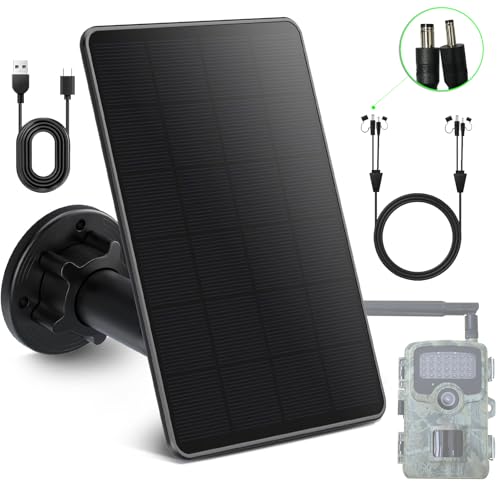
A universal solar panel kit is the cheapest way to turn an ordinary AA trail camera into a season-long, set-and-forget setup, and that is exactly what this CREATIVE XP 6V/12V panel is built to do. Instead of buying a whole new solar camera, you bolt a small solar panel to a tree next to a camera you already own, run its cable into the camera's external power port, and let the sun do the battery-swapping you used to do by hand. For remote cameras you dread hiking back to, that is a real quality-of-life upgrade for not much money.
The headline feature is the selectable 6V/12V output, which is what makes it universal. Different camera brands expect different input voltages, so a switch that lets you set the panel to match means one kit can power Browning, Stealth Cam, Moultrie, and many other AA cameras rather than being locked to a single brand. It also includes a built-in buffer battery, which stores solar energy so the camera keeps running through cloudy days and overnight, not just while the sun is directly on the panel.
The one thing every buyer must understand before clicking buy is compatibility. This panel only works if your camera has an external power port that accepts the panel's plug at a voltage the camera supports. Not every camera has such a port, and the plug type and voltage must match, or the kit does nothing or, worse, risks the camera. This is the single most common reason for a disappointed review, and it is entirely avoidable by checking your camera's specs first.
This review covers exactly what this solar kit does and which cameras it fits, how it is built and mounted, the honest truth about whether solar really eliminates battery swaps, especially in winter, and who should buy it versus who is better off with a brand-specific OEM panel or an integrated-solar camera.
Universal Lithium Solar Panel Kit for Trail Cameras (Selectable 6V/12V)
Prices may change · Free shipping with Prime
What This Solar Kit Does & Compatibility
The job of this kit is simple: it converts an AA or external-port trail camera into a solar-powered one. The panel collects sunlight, a built-in buffer battery stores the energy, and a cable feeds power into your camera's external power port to keep its batteries charged or to power the camera directly. The result, when it fits your camera and gets enough sun, is a camera you can hang once and leave for a full season without the battery-swap trips that are the biggest chore of running trail cameras in remote spots.
Compatibility is the whole game, and it comes down to two things: the port and the voltage. First, your camera must have an external power input port. Many AA cameras have one, often a small barrel jack on the bottom or side, but not all do, and a camera with no external port simply cannot use this or any external panel. Second, the voltage must match. This kit's standout feature is its selectable 6V/12V output, because different brands expect different input voltages; you set the switch to whatever your camera calls for. Browning cameras commonly use 12V, while many other cameras use 6V, so check your camera's manual or the spec for its external power input before you buy and set the switch.
The practical advice is to verify three things first: that your camera has an external power port, what voltage that port expects, and that the kit's plug tip matches your camera's jack. The kit fits a wide range of brands including Browning, Stealth Cam, and Moultrie precisely because of the selectable voltage, but universal means flexible, not automatic. Confirm the fit and the kit works as promised; skip that step and you risk a panel that does nothing or, with the wrong voltage, potential harm to the camera. Our solar trail camera guide covers how to read your camera's power spec so you get this right the first time.
Build, Weatherproofing & Mounting
The kit is built to live outdoors year-round, with a weatherproof housing on the panel and the buffer battery so rain, dust, and snow do not kill it. That weatherproofing is essential rather than a bonus; a solar panel that cannot survive the same conditions as the camera it powers would be pointless, and this one is rated to handle the same weather a trail camera faces over a full season.
Mounting is where the kit's separate-panel design pays off. Because the panel is its own unit connected to the camera by a cable, you can mount the camera in the shade aimed at your trail and place the panel up higher or out in a sunny gap where it actually catches light. This is the same advantage detachable-solar cameras have over fixed integrated-solar models: you are never forced to compromise the camera's aim to feed the panel. The included cable is long enough to give you real flexibility in positioning, which matters because the best camera spot and the best sun spot are rarely the same place. Use a strap or screw mount to angle the panel toward the southern sky for the most consistent input.
The trade for that flexibility is the same one the Bushnell CelluCORE 20 Solar makes with its detachable panel: the separate panel and its cable add a second piece that is exposed and, on public or shared land, vulnerable to theft or tampering. Route the cable to make it hard to grab, mount the panel where it is not obvious, and on any spot you do not control, weigh whether the exposed panel is worth the risk. On your own property the separate-panel design is pure upside, giving you the freedom to chase the sun without ever moving the camera.
Does Solar Actually Eliminate Battery Swaps?
The honest answer is: usually, in the right conditions, but not always, and winter is the asterisk. In spring, summer, and fall, with the panel getting real sun, a solar kit like this genuinely can keep a camera running indefinitely without battery trips. The buffer battery is the key piece that makes this work day to day: it stores solar energy so the camera keeps running overnight and through cloudy stretches, rather than only working when the sun is directly on the panel. With adequate sun and a camera that is not triggering constantly, the kit keeps the camera's batteries topped and the swaps stop. That is the experience the marketing promises, and in fair-weather conditions it delivers.
Winter and high-trigger cameras are where the promise softens. Short winter days, low sun angles, and snow piling on the panel all cut solar input sharply in the coldest months, exactly when you may least want to make a maintenance trip. At the same time, a camera on a busy spot that fires and, if cellular, uploads constantly draws more power than the winter sun can replace. When demand outpaces input, the buffer battery and the camera's own AAs slowly drain rather than staying topped. So in deep winter, or on a high-traffic camera, the kit may extend your battery life dramatically without fully eliminating swaps.
The practical playbook: angle the panel toward the southern sky for the best low-angle winter sun, brush snow off it whenever you visit, and keep good lithium AAs in the camera as the foundation the solar tops up, since lithium holds voltage in the cold where alkaline sags. Set up that way, the kit turns a camera that needed batteries every few weeks into one you check a couple times a season, which is the real value even if winter prevents a literally never-touch-it result.
Who Should Buy (And Who Shouldn't)
Buy this kit if you own one or more AA cameras with external power ports and you are tired of hiking out to swap batteries on remote, hard-to-reach cameras. For that exact situation it is the cheapest possible fix: a small investment converts a camera you already trust into a season-long setup, and for a camera you hate revisiting it pays for itself in saved trips after a single season. It is especially smart if you run cameras from multiple brands, because the selectable 6V/12V output means one type of kit can serve a Browning, a Stealth Cam, and a Moultrie rather than buying a different OEM panel for each. Anyone managing several remote cameras will appreciate that flexibility and the cost savings versus brand-specific panels.
Do not buy this kit if your camera has no external power port, because then it simply cannot connect, and no amount of universality changes that. Skip it if you are not willing to verify the plug type and voltage match before buying, since a mismatch is the number one cause of disappointment and a wrong-voltage connection can risk the camera. Think twice if your camera is on a high-trigger spot in a northern winter, where solar may not fully keep up and you would still be making some battery trips. And if you would rather not deal with matching ports and voltages at all, you may be happier buying a camera with integrated solar built in, or your camera brand's own OEM panel designed to plug in without guesswork. For the hands-on owner with the right camera, though, this kit is one of the best value upgrades in the whole trail-camera accessory category.
Alternatives Worth Considering
The main alternative is a brand-specific OEM solar panel made for your exact camera, such as Spypoint's, Moultrie's, or Browning's own panels. The advantage of going OEM is certainty: the plug, the voltage, and the power profile are guaranteed to match your camera, so there is no compatibility homework and no risk of a wrong-voltage mistake. The downside is that OEM panels usually cost more and only work with one brand, so if you run cameras from several makers you would need several different panels. For a single camera where you want zero guesswork, OEM is the safe call; for a mixed fleet on a budget, this universal kit is the more economical choice.
The other alternative is to skip add-on solar entirely and buy a camera with integrated or detachable solar built in. The Bushnell CelluCORE 20 Solar includes a detachable panel that gives you the same sun-chasing flexibility as this kit but engineered to fit perfectly, and the Spypoint Flex-S builds solar and a rechargeable battery into the body for a true out-of-the-box set-and-forget camera. If you are buying a new camera anyway, an integrated-solar model removes the compatibility question altogether.
Finally, if your real goal is simply to stop swapping batteries so often and solar feels like too much fuss, a 24-pack of lithium AAs is the low-tech alternative: it does not eliminate swaps, but it stretches the interval two to three times versus alkaline and adds reliable cold-weather voltage, which for an easy-to-reach camera may be all you need. Our solar trail camera guide compares all three approaches so you can match the power solution to how remote and how busy your camera really is.
Our Verdict
The cheapest way to make an AA camera set-and-forget — confirm your camera has the right external port and voltage first. For remote sites you hate revisiting, it pays for itself.
Universal Lithium Solar Panel Kit for Trail Cameras (Selectable 6V/12V)
$29.99
Prices may change · Free shipping with Prime
| Full Specifications | |
|---|---|
| Connectivity | — |
| Monthly fee | — |
| Night flash | — |
| Photo resolution | — |
| Trigger speed | — |
| Detection range | — |
| Flash range | — |
| Power | Solar 6V/12V + buffer battery |
| Weather rating | Weatherproof |
| Storage | — |
| Video | — |
Frequently Asked Questions
Will this solar panel fit my trail camera?
How do I choose between 6V and 12V?
Does it really eliminate battery swaps?
How does it perform in winter?
What is the buffer battery for?
Is a universal kit or a brand OEM panel better?
Compare With Similar Trail Cameras
Head-to-Head Comparisons
Universal Lithium Solar Panel Kit for Trail Cameras (Selectable 6V/12V)
$29.99
Prices may change · Free shipping with Prime