
Browning
Strike Force Pro X 1080
$113.85
Pros & Cons
Pros
- Outstanding day and night image quality — Browning's reputation earned honestly
- Legendary battery life: a season-plus on just 6 AAs
- 0.22s trigger with 100 ft detection and a 120 ft flash reach
- Invisible no-glow IR keeps it covert on pressured deer
- 1.5-inch color screen for in-field setup, with SD support to 512GB
Cons
- No connectivity — you still pull the card
- Premium price for an SD-only camera
- Video tops out at 1080p
At a Glance
Overview
Browning's reputation in trail cameras was built on two things — image quality and battery life — and the Strike Force Pro X 1080 is the camera that earns that reputation honestly in a compact, no-subscription package. It's an SD-card camera with no cellular and no WiFi, which in 2026 puts it deliberately out of step with the connected crowd. That's the point. Browning bet the budget on the sensor, the optics, the flash, and the firmware instead of a radio and a data plan, and the result is one of the best-looking no-fee cameras you can buy.
The headline numbers are strong: 24 megapixels of native-feeling resolution, a 0.22-second trigger, a 100-foot detection range backed by a no-glow infrared flash that reaches a full 120 feet, and SD support up to 512GB for long unattended runs. But the spec that sells Browning to people who've owned a dozen cameras is the one that doesn't fit on a sticker — the day-and-night image quality is genuinely excellent, and the battery life on just 6 AA batteries is legendary, routinely stretching a full hunting season and beyond.
The honest framing is the trade you're making: you pay a premium price — more than many cellular cams cost up front — for a camera that you still have to walk to and pull a card from. There's no checking it from the truck, no photos sent to your phone, no app at all. What you get for that premium is reliability and picture quality that budget cams can't touch and a complete absence of recurring fees. For serious hunters who scout properties they walk anyway and refuse to pay a subscription, that's a trade worth making.
This review covers the build and theft resistance, what the trigger and detection really do in the field, how the no-glow flash performs at distance, the pure card-pull workflow and the long-term cost math against cellular, the famous battery life and cold-weather behavior, and who should buy the Strike Force Pro X over a Browning sibling or a budget alternative. If image quality and battery life top your list and you don't want a plan, this is a benchmark.
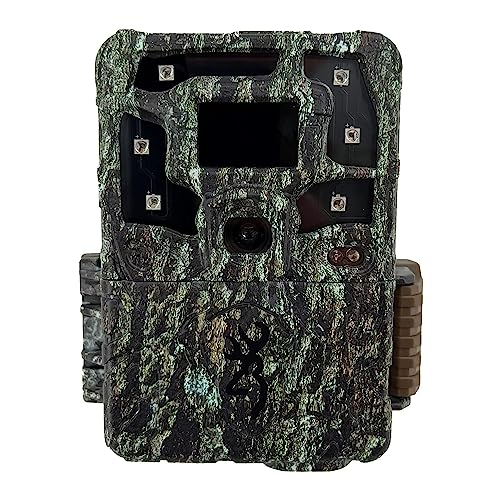
Browning Strike Force Pro X 1080 Trail Camera (24MP)
Prices may change · Free shipping with Prime
Design, Build & Theft Resistance
The Strike Force Pro X is famously small — Browning's Strike Force line has long been the compact end of their range — which makes it easy to tuck onto a slim trunk or hide in tight cover where a bulkier camera would stick out. The case is a tough, textured camo polymer that takes abuse well, and Browning's weatherproofing has a strong track record for keeping moisture out across seasons of rain, snow, and humidity swings. A gasketed door protects the SD slot, the 6-AA battery tray, and the 1.5-inch color setup screen.
That color screen is a genuine quality-of-life feature: you can frame the shot, review captures, and confirm settings right at the tree without a phone or a separate viewer. Browning's menus are mature and intuitive after years of refinement, so setup is quick. Mounting is via the integrated strap channel, with a tree-mount/tripod thread for posts and adjustable brackets.
Theft resistance follows the SD-cam norm: there's a slot for a Python-style cable lock and compatibility with Browning's own security boxes and lock brackets, but no GPS tracking or covert recovery. The no-glow flash does keep the camera from revealing itself at night, which helps against opportunistic theft. Because this is a premium camera that will draw a thief's interest more than a $50 cam, the lockbox-and-cable conversation matters more here — on any public-access, leased, or otherwise exposed spot, treat a steel security box as part of the purchase. Browning sells boxes sized specifically for the Strike Force, which is the clean solution. On private land you walk and control, the built-in provisions are usually enough.
Detection & Trigger Speed in the Field
The Strike Force Pro X is tuned for real hunting situations rather than spec-sheet bragging, and it shows. The 0.22-second trigger isn't the fastest number in this catalog — some budget cams claim 0.1 or even 0.05 seconds — but Browning's trigger is consistent and dependable, and in the field a reliable 0.22 seconds catches walking deer cleanly on a trail or a scrape. The 100-foot detection range is well-matched to the flash, so the camera doesn't trigger on heat it can't actually illuminate at night. Recovery between shots is quick enough to capture a sequence.
The resolution story is where Browning genuinely separates from the budget pack. The Strike Force Pro X is rated at 24MP, and crucially Browning is known for honest, well-processed images rather than the wildly interpolated 48MP and 64MP claims that budget brands print on their boxes. A budget cam's 48MP file is software-upscaled from a much smaller sensor — more pixels, not more detail. Browning's 24MP, by contrast, comes from a camera engineered to produce clean, color-accurate, low-noise images, and the real-world result looks better than the higher-number budget cams despite the smaller figure. This is the clearest example in the category of why megapixel count is a poor proxy for image quality.
Video records at 1080p with sound. It's solid, though video is not this model's headline — if video is your priority, Browning's Recon Force Elite HP5 with 1080p/60fps is the better choice. For stills, which is what most hunters care about for scouting and patterning, the Strike Force Pro X delivers some of the best day-and-night image quality available without a subscription, and that, more than any single spec, is why people pay the premium.
Night Flash: No-Glow, Low-Glow or White?
The Strike Force Pro X uses a no-glow infrared flash — invisible 940nm-class LEDs that produce no visible light when they fire. This is the covert choice and a major reason to pick this model over Browning's low-glow options. Stand in front of it in the dark and you'll see nothing, which keeps it hidden from pressured, educated deer that have learned to notice the faint red glow of an 850nm low-glow camera, and discreet for any spot where you don't want the camera advertising itself at night. For serious hunters working mature bucks, that invisibility is worth real money.
What sets the Strike Force Pro X apart from cheaper no-glow cams is reach: the flash is rated to a full 120 feet — longer than its 100-foot detection range and well beyond what most budget no-glow cams illuminate. The usual physics tradeoff (940nm light reads dimmer to the sensor than 850nm) is offset here by Browning's flash engineering and image processing, so night photos are well-exposed and detailed out to a genuinely useful distance, without the blown-out hotspot or crushed shadows that plague lesser cameras. That long, clean illumination is a standout feature.
If you specifically need color night images — to identify a person, read a plate, or distinguish two similar deer by coat — no infrared camera can do that; you'd need a white-flash camera like GardePro's E8P, accepting that white flash is highly visible and spooks game. And if you want longer night-video reach for cinematic footage, Browning's Recon Force Elite HP5 pushes IR to 130 feet but uses a low-glow flash. For covert, long-range, high-quality black-and-white night stills, the Strike Force Pro X's no-glow flash is one of the best in this catalog. This is the classic no-glow versus low-glow versus white-flash decision, and the Strike Force Pro X is firmly the covert, long-reach no-glow pick.
WiFi & SD-Card Workflow — No Monthly Fee
The Strike Force Pro X is a pure SD-card camera — no WiFi, no Bluetooth, no cellular, no app of any kind. You see your photos by retrieving the SD card and reading it on a phone (with an adapter) or a computer. Unlike GardePro's WiFi cams, there's no wireless image pull even up close; this is a deliberate, old-school workflow, and Browning leans into it because it's bulletproof. There's no connection to drop, no firmware to wrestle over the air, and no pairing to fail. You walk to the camera, swap or pull the card, and review.
The payoff is the complete absence of recurring cost. A cellular camera runs roughly $60 to $200 a year in data fees depending on tier and photo volume; the Strike Force Pro X costs you nothing after purchase, forever. That changes the long-term math in a way the higher sticker price hides. Over three or four years, a cellular cam's plan fees can equal or exceed the entire price of the Browning — so for someone who scouts properties they walk regularly, the no-fee camera is often cheaper in total ownership despite costing more up front. It supports SD cards up to 512GB, so you can leave it running a very long time between visits without filling the card.
The honest tradeoff is the lack of remote convenience. You cannot check this camera without going to it, so it's the wrong tool for a stand you can't easily reach or a property you visit rarely. For those situations, a cellular cam earns its plan. But for the hunter who's on the property anyway, the card pull is a non-issue — carry a spare formatted 512GB-class card, swap-and-go in seconds, and review at home while the camera keeps shooting undisturbed. For no-fee buyers who value reliability over remote access, this workflow is exactly what they're paying the premium to get.
Power, Batteries & Cold Weather
Battery life is the Strike Force Pro X's signature trick, and it's not marketing — Browning cameras are renowned for sipping power, and this one runs a full hunting season and often well beyond on just 6 AA batteries. Most competitors need 8 or 12 cells to approach Browning's longevity; doing it on 6 is genuinely impressive and means cheaper, lighter battery loads and fewer trips to the camera. For a no-fee camera you visit only to pull cards, that longevity is a real part of the value.
Battery chemistry still matters, especially for the cold. Lithium AAs (Energizer Ultimate Lithium and similar) are the right choice for any serious deployment: they hold voltage flat across their entire life, weigh less, resist leaking, and keep working in deep cold where alkalines fail. Alkalines will run the camera in mild weather but sag badly in winter, can trigger false low-battery shutdowns, and risk leaking and corroding contacts over a long sit. Given how long the Strike Force runs, springing for lithium once and forgetting about it for the season is the obvious move.
In genuine cold, Browning's efficiency plus lithium AAs is about as bulletproof as a non-solar camera gets — the combination routinely shoots through hard freezes when lesser cameras quit. The Strike Force Pro X can also be paired with an external power source via its power jack for even longer unattended runs if you want to eliminate battery trips entirely. But for most owners, 6 lithium AAs and a season of walk-away confidence is the whole appeal: load it, hang it, and trust it to still be running when you come back.
Who Should Buy (And Who Shouldn't)
Buy the Browning Strike Force Pro X if image quality and battery life are at the top of your list and you refuse to pay a subscription. It's the camera for the serious hunter who scouts and patterns deer on properties they walk anyway, who wants the best day-and-night stills available without a plan, and who values a camera that just works season after season. The honest 24MP images, the long-reach 120-foot no-glow flash, the legendary 6-AA battery life, and the compact, easy-to-hide body make it a benchmark in the no-fee SD category. The premium price buys real, repeatable quality, not just a brand name.
Don't buy it if you need remote access — there's no WiFi or cellular, so a camera you can't easily walk to is the wrong application; get a cellular cam and accept the data plan. Skip it too if video is your main goal, since the Recon Force Elite HP5 with 1080p/60fps and sound is Browning's video specialist, or if you specifically need color night images, which requires a white-flash camera like the E8P. And if your budget simply can't stretch to a premium SD cam, GardePro's A3S delivers excellent night stills for a fraction of the price — you give up Browning's polish and battery longevity, but it's a smart value.
The clean summary: the Strike Force Pro X is what you buy when you've decided that picture quality, covert long-range flash, and walk-away battery life matter more than connectivity, and you'd rather pay once than pay a plan forever. For that buyer, it's one of the most satisfying cameras in this catalog.
Alternatives Worth Considering
The most natural comparison is Browning's own Recon Force Elite HP5. It's the video specialist of the pair — 1080p at 60fps with sound and a 130-foot RADIANT 5 IR flash for long night-video reach — and it adds a larger 2-inch screen. The catch is that the HP5 uses a low-glow flash (a faint red glow at night) rather than the Strike Force's fully covert no-glow. So choose the Strike Force Pro X for covert stills and the longest invisible flash; choose the HP5 if best-in-class video and maximum IR reach matter more than total concealment.
For buyers who want premium reliability above all and will spend for it, the Reconyx HyperFire 2 HP2X is the buy-it-once option: a 0.2-second trigger, true no-glow covert IR, and a year-plus of battery life on 12 AAs, made in the USA. It costs several times more and shoots only 3MP, but for security and research deployments where uptime is everything and a missed frame is unacceptable, nothing's more dependable. It's overkill for casual hunting but the gold standard for set-and-forget reliability.
And at the opposite end, if the Strike Force's premium price is the sticking point, the GardePro A3S is the value alternative. It's a simple SD-card cam like the Browning but a fraction of the cost, and its Sony Starvis sensor delivers genuinely excellent night stills for under $60. You give up Browning's image polish, build refinement, and famous battery longevity, but for a budget-conscious hunter it covers the fundamentals well. Net: Strike Force Pro X for covert stills and battery life, HP5 for video and IR reach, Reconyx HP2X for ultimate reliability, A3S to save serious money.
Our Verdict
The SD-cam image-quality and battery-life benchmark for serious hunters who don't want a subscription. You pay up for a Browning, but the reliability and night photos justify it.
Browning Strike Force Pro X 1080 Trail Camera (24MP)
$113.85
Prices may change · Free shipping with Prime
| Full Specifications | |
|---|---|
| Connectivity | sd |
| Monthly fee | None |
| Night flash | no-glow |
| Photo resolution | 24MP |
| Trigger speed | 0.22s |
| Detection range | 100ft |
| Flash range | 120ft |
| Power | 6x AA |
| Weather rating | Weatherproof |
| Storage | SD up to 512GB |
| Video | 1080p |
Frequently Asked Questions
Is there really no monthly fee with the Strike Force Pro X?
Why does a 24MP Browning look better than a 48MP or 64MP budget cam?
Will the flash spook deer at night?
How is the Strike Force Pro X different from the Recon Force Elite HP5?
How long does the battery really last?
Does it have WiFi or an app to pull photos?
Is the Strike Force Pro X worth the premium over a budget cam?
How should I protect it from theft?
Related Buying Guides
Compare With Similar Trail Cameras
Spypoint
Flex-M
cellular · Free tier (100 photos); from $10/mo · low-glow
$259.98
Head-to-Head Comparisons
Browning Strike Force Pro X 1080 Trail Camera (24MP)
$113.85
Prices may change · Free shipping with Prime