
GardePro
A3S
$71.99
Pros & Cons
Pros
- Sony Starvis sensor delivers night images that genuinely rival $200 cameras
- Class-leading 100 ft day-and-night detection at a sub-$60 price
- 0.1s trigger speed catches deer that walk through quick
- True 940nm no-glow flash keeps it covert
- Simple, dependable SD-card operation with nothing to subscribe to
Cons
- No connectivity — you have to physically pull the card to see photos
- Runs on 8 AAs only, no rechargeable option
- No app, so no remote convenience at all
At a Glance
Overview
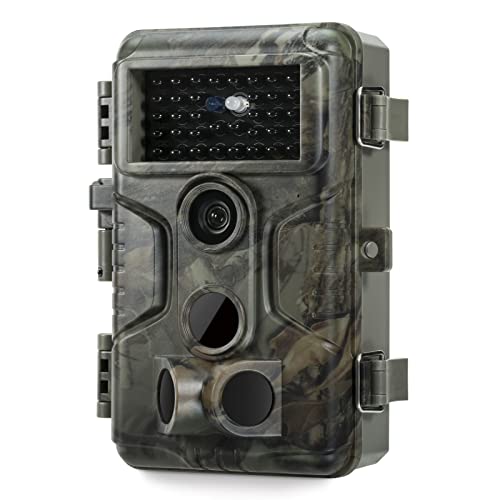
If a first-timer asked me to name one trail camera that punches so far above its price it's almost unfair, the GardePro A3S is the answer. For under $60 it pairs a Sony Starvis image sensor — the same family of low-light sensor used in cameras costing three and four times as much — with a class-leading 100-foot detection range, a 0.1-second trigger, and a true 940nm no-glow flash. There's no WiFi, no app, and no subscription. You pull the SD card, you look at the photos, and you're consistently surprised by how good they are.
The A3S is the SD-card purist's budget hero. By spending nothing on a cellular radio or a WiFi chip, GardePro put the money where it counts on a camera like this: the sensor and the optics. The result is night images with real detail and clean exposure instead of the muddy, blown-out grayscale that plagues cheap cams. In daylight it's sharp and color-accurate. And because it's dead simple — strap it up, set it, pull the card later — there's very little to go wrong.
The honest framing is the flip side of that simplicity: this camera does nothing remotely. There's no way to see a photo without physically retrieving the SD card and reading it on a phone or computer. That's not a flaw, it's the entire design philosophy — every dollar that would have gone to connectivity went to image quality instead. If you're checking a camera you walk past anyway, or you simply want the best night photos your $60 can buy, that tradeoff is a gift. If you need photos sent to your phone from afar, this isn't the category for you.
This review covers what the Sony Starvis sensor actually delivers, why the detection and trigger specs hold up in the field, how the no-glow flash performs, what the card-pull workflow really feels like to live with, and who should buy the A3S over its cheaper A3 sibling or a fancier connected cam. For pure, no-nonsense image quality on a budget, this is the bar everything else gets measured against.
GardePro A3S Trail Camera (Non-Cellular, Sony Starvis)
Prices may change · Free shipping with Prime
Design, Build & Theft Resistance
The A3S wears GardePro's compact, boxy camo case — light, unobtrusive against bark, and easy to hide on a modest tree. The IP66 weather rating is the real deal in my experience; the gasketed door has kept rain and wet snow out of the SD slot, battery tray, and small setup screen. It straps tight with a single ratchet strap and stays put in wind, and there's a tripod thread on the bottom for posts and homemade mounts. For a sub-$60 camera the build feels more solid than the price suggests — no flimsy latches or gappy seams.
Setup happens entirely on the camera via its little screen and button pad, since there's no app. Menus are straightforward: photo or video, resolution, trigger interval, time-lapse, the usual. A first-timer can have it configured in a couple of minutes without a manual.
Theft resistance is basic, as it is across this price tier: a slot for a python cable lock and compatibility with a security box, but no GPS or locking mechanism. On the plus side, the no-glow flash means it doesn't reveal itself at night, which is a small but real deterrent against opportunistic grabs. For backyard, private-land, and near-cabin use — where most A3S cameras live — that's plenty. On public or leased ground, add a steel lockbox and a cable; the camera is cheap enough that the box may cost as much, but it's the right call where strangers roam. As always, match the security hardware to the spot, not the camera's price.
Detection & Trigger Speed in the Field
The A3S nails the fundamentals that actually matter in the field. The 0.1-second trigger is genuinely quick — fast enough to catch a deer mid-stride in the center of the frame rather than a tail disappearing out the edge — and the detection range is the standout: a rated 100 feet, day and night, which is class-leading at this price and translates to dependable usable triggers well past 80 feet in open hardwoods. That long reach means you can cover a wider lane or a bigger field edge with a single camera. Recovery time between shots is fast enough to capture a sequence of the same animal.
Now the resolution number. The A3S advertises 64MP stills, and like virtually every budget trail cam, that figure is interpolated — the native sensor resolution is lower, and the camera scales the image up in software, which adds pixels but not real detail. So don't expect 64 true megapixels of crop. The difference with the A3S is the sensor underneath: a Sony Starvis, built specifically for low-light performance. That's where the magic is. Interpolation aside, the actual image fidelity — especially at night — is markedly better than a generic budget cam playing the same megapixel game.
Video records at up to 1296p with audio, a touch above plain 1080p, and looks clean in daylight and acceptable at night within flash range. But the A3S is fundamentally a stills camera that happens to do decent video, and stills are where it shines. For scouting, patterning deer, and documenting wildlife, the combination of a fast trigger, long detection, and a genuinely good sensor makes this one of the most capable budget capture chains you can buy.
Night Flash: No-Glow, Low-Glow or White?
The A3S uses a true no-glow infrared flash — 940nm LEDs that produce no visible red glow when they fire. This is the covert end of the spectrum and the right choice for the A3S's typical buyer. Stand in front of it in the dark and you won't see it light up, which keeps it hidden from pressured deer that have learned to spot the faint red wink of cheaper 850nm low-glow cams, and from anyone who might otherwise notice a camera at night. For covert scouting and discreet property monitoring, no-glow is what you want.
The usual physics tradeoff applies — 940nm light is dimmer to the sensor than 850nm — but this is exactly where the Sony Starvis sensor earns its reputation. Most no-glow cams sacrifice noticeable night brightness for that invisibility; the A3S, thanks to its low-light sensor, claws much of it back. Night stills out to the rated flash range are well-exposed and detailed, without the blown-out center hotspot and crushed shadows that ruin cheap no-glow cameras. It's the single most impressive thing about the camera, and the main reason it gets compared to gear costing far more. Beyond the effective flash distance the frame falls dark, as on every IR cam, so place it for the range you need.
If you specifically want color night images — to identify a face, read a plate, or distinguish two similar deer by coat — the A3S can't do that; that's a white-flash job, and GardePro's E8P is the family member built for it (at the cost of being visible at night). For covert, high-quality black-and-white night photography on a budget, the A3S's no-glow flash plus Starvis sensor is the standout combination in this catalog. This is the classic no-glow versus low-glow versus white-flash decision, and the A3S is the no-glow value champion.
WiFi & SD-Card Workflow — No Monthly Fee
Let's be clear about what the A3S is: a pure SD-card camera with no connectivity of any kind — no cellular, no WiFi, no Bluetooth, no app. That means there is exactly one way to see your photos: physically retrieve the microSD card and read it on a phone (with an adapter) or a computer. You walk to the camera, pop the card out (or swap in a fresh one and review the first later), and that's your workflow. It's the oldest, simplest, most reliable method in the category, and for a lot of people it's all they ever needed.
The upside of this approach is everything you don't deal with: no app pairing, no firmware quirks over WiFi, no failed Bluetooth handshakes, no subscription. The money GardePro saved by leaving out radios went straight into the sensor — which is precisely why the A3S out-shoots connected cameras at the same price. And the cost savings versus cellular are dramatic and permanent: a cellular cam runs roughly $60 to $200 a year in data fees, while the A3S costs you nothing after purchase, forever. Over a few seasons that's hundreds of dollars saved, plus the A3S itself is cheaper to buy than most connected cams to begin with.
The tradeoff, of course, is zero remote convenience. You cannot check this camera without going to it and handling the card. If walking to the camera is impractical — a remote stand, a distant lease — you want a cellular cam and you should accept the plan. But if you're at the property anyway, the card-pull routine is fast, foolproof, and free. A simple habit helps: carry a spare formatted card so you swap-and-go in seconds and review at home, leaving the camera barely disturbed. For the no-monthly-fee buyer who values image quality over connectivity, the A3S is close to the platonic ideal.
Power, Batteries & Cold Weather
The A3S runs on 8 AA batteries with no rechargeable option in the box, so the chemistry you load matters. Alkalines technically work but they're the weak choice: they sag in the cold, their dropping voltage can trigger false low-battery shutdowns with usable charge remaining, and they're more likely to leak and corrode the contacts over a long deployment. Lithium AAs (Energizer Ultimate Lithium and similar) hold voltage flat across their entire life, weigh less, resist leaking, and keep working in deep cold — in a camera you leave out for a season, they're worth every penny. Rechargeable NiMH AAs are usable but their lower voltage can slightly weaken flash performance.
The good news is that without WiFi or cellular radios sipping power, the A3S is efficient. Battery life depends mostly on photo and video volume and flash use at night, but on a moderate trail with lithium AAs, multi-month runtime is realistic — often longer than connected cameras that burn power keeping radios alive. Heavy video and a very busy night-active site will shorten that, as always.
In genuine cold the rule is simple and worth repeating: run lithium AAs. They're the difference between a camera that keeps shooting through a hard freeze and one that quits with "dead" alkalines that were only voltage-sagging. The A3S doesn't have a solar port or internal pack in the same way some siblings do, so plan your battery swaps around your visit schedule and load lithium from the start for cold-season runs. For its price, the A3S's combination of low power draw and lithium-friendly operation makes it an easy camera to keep alive through a long winter.
Who Should Buy (And Who Shouldn't)
Buy the GardePro A3S if you want the best night image quality your money can buy at the budget end and you don't need photos sent to your phone. It's my top recommendation for a first-time trail cam owner, for hunters scouting and patterning deer where they can pull the card on a regular walk-in, and for wildlife watchers who want detailed, well-exposed nocturnal photos without paying a subscription or fighting an app. The Sony Starvis sensor, 100-foot detection, fast trigger, and covert no-glow flash make it feel like a much more expensive camera. For pure capture quality per dollar, nothing else in this catalog beats it.
Don't buy the A3S if you need any kind of remote access. It has no WiFi and no cellular, so the only way to see images is to physically retrieve the card — if walking to the camera is impractical, you want a connected cam and the costs that come with it. Also skip it if you specifically need color night images for security ID, which requires a white-flash camera like the E8P, or if pulling photos to your phone over WiFi (without a card reader) genuinely matters to you, in which case the GardePro E8 line adds that convenience for a bit more money.
For most budget buyers, though, the honest truth is that the A3S gives you the part that actually matters — the picture — and skips the part you may never use. If image quality is the goal and the card pull doesn't bother you, start here and don't overthink it.
Alternatives Worth Considering
The closest alternative is the A3S's own little brother, the GardePro A3. It's the same simple SD-card, no-glow, fast-trigger formula but steps down to a 48MP interpolated mode and, more importantly, a more ordinary sensor than the A3S's Sony Starvis. It's about $10 cheaper and still a reliable camera that nails the basics — so if your budget is razor-thin and you can live with somewhat less impressive night images, the A3 saves a little money. But the A3S's superior night sensor is exactly why it's worth the small premium; for most buyers the A3S is the smarter spend.
If you want the same no-fee philosophy but with photos pulled to your phone over WiFi instead of via the card, the GardePro E8 adds a local WiFi/Bluetooth app workflow (within about 45 feet) on top of a similar fast trigger and no-glow flash. You trade a bit of the A3S's image-quality-per-dollar edge for the convenience of wireless image pulls. It's the right pick if the card pull is the dealbreaker.
Finally, for the absolute speed freak on a budget, the Vikeri 4K 48MP offers a freakishly fast 0.05-second trigger and a 130-degree wide lens for under $50, plus 4K video. Its detection range is shorter than the A3S's 100 feet and its off-brand build and firmware are more of a gamble than GardePro's track record, but as a cheap, ultra-fast second or third camera it's worth a look. Net: A3S for the best budget night quality, A3 to shave a few dollars, E8 if you want WiFi pulls, Vikeri for raw trigger speed and a wide lens.
Our Verdict
The single best budget trail cam we'd hand a first-timer — night quality and detection that embarrass its price. If you don't need photos sent to your phone, start here.
GardePro A3S Trail Camera (Non-Cellular, Sony Starvis)
$71.99
Prices may change · Free shipping with Prime
| Full Specifications | |
|---|---|
| Connectivity | sd |
| Monthly fee | None |
| Night flash | no-glow |
| Photo resolution | 64MP |
| Trigger speed | 0.1s |
| Detection range | 100ft |
| Flash range | 100ft |
| Power | 8x AA |
| Weather rating | IP66 |
| Storage | microSD |
| Video | 1296p |
Frequently Asked Questions
Is there really no monthly fee with the GardePro A3S?
How do I get the photos off the A3S if it has no app?
Why is the A3S's night image quality so good for the price?
Is the 64MP resolution real?
Will the flash spook deer at night?
Is the A3S good for a beginner or for backyard wildlife?
What batteries should I use, especially in cold weather?
How is the A3S different from the cheaper A3?
Related Buying Guides
Compare With Similar Trail Cameras
Head-to-Head Comparisons
GardePro A3S Trail Camera (Non-Cellular, Sony Starvis)
$71.99
Prices may change · Free shipping with Prime