
Reconyx
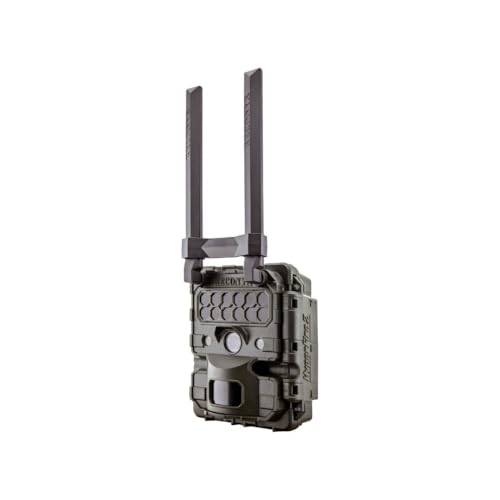
HyperFire 2 HS2XC
$659.99
Pros & Cons
Pros
- Legendary 0.2s trigger and reliability — it simply does not miss the shot
- IntelliTag AI image recognition flags people and animals for security use
- Best-in-class battery life: months on 12 AAs even running cellular
- True no-glow covert IR for sensitive security and research sites
- Built like a tank with SD support up to 512GB as a local backup
Cons
- Very expensive — multiples of a consumer cell cam
- Only 3MP true resolution; this is a reliability tool, not a megapixel race
- Requires a carrier data plan on top of the price
At a Glance
Overview
The Reconyx HyperFire 2 HS2XC is the camera you buy when a missed frame or a dead camera is simply unacceptable. At roughly $500 to $660, it costs multiples of a consumer cellular camera, and it deliberately ignores the megapixel race that drives the rest of the market. What you pay for instead is reliability: a legendary 0.2-second trigger that doesn't miss, best-in-class battery life that runs months on AAs even over cellular, and the kind of build quality that earns Reconyx its place on research projects and serious security installations.
This is not a deer-feeder camera for most hunters, and Reconyx doesn't pretend otherwise. The HS2XC captures at a true 3MP resolution, with 720p video, numbers that look laughable next to the 40MP and 4K marketing on cheaper cameras. But that 3MP is genuine, uninterpolated sensor resolution tuned for clean, usable images in the conditions that matter, and the camera's whole design philosophy is that uptime and trigger reliability beat pixel counts every time.
The core buying question is simple and unsentimental: is a missed image or a camera that dies mid-deployment a problem you cannot tolerate? For property security on a sensitive site, for wildlife research where data gaps ruin a study, or for trophy-property monitoring where you only get one chance at a target animal, the answer is often yes, and the Reconyx tax is worth it. For everyone else, a mid-tier cellular camera delivers far more apparent value.
This review covers what the HS2XC's reliability actually buys you, why its 3MP sensor is beside the point, how IntelliTag AI works for security, and which buyers should pay the premium versus looking at the consumer cellular cameras in this catalog.
Reconyx HyperFire 2 HS2XC Cellular 4G LTE Covert IR Camera (IntelliTag AI)
Prices may change · Free shipping with Prime
Design, Build & Theft Resistance
The HyperFire 2 is built like a tool that's meant to live outdoors for years, not a season. The housing is compact, understated, and genuinely rugged, with a sealed case and a positive-locking door that shrugs off weather and abuse that would crack a consumer camera. Reconyx's reputation for cameras that keep running after a decade in the field is earned in this build quality, and it's a meaningful part of what justifies the price for institutional and security buyers.
The camera supports SD storage up to 512GB, which matters more here than on other cellular cameras: it gives you a complete local backup of every image alongside the cellular transmission, so a service hiccup never costs you data. For research and security applications where a gap in the record is a real problem, that local-plus-cellular redundancy is exactly the right design, and it stands in sharp contrast to the cloud-only, no-SD approach of cameras like the Moultrie Edge 2 Pro.
Theft and tamper resistance is a serious consideration on the sensitive sites this camera is built for. The housing accepts security cable locks and Reconyx offers a model-fit steel security enclosure, and the covert no-glow flash means the camera doesn't advertise itself at night. Because the HS2XC is so often deployed for property security and on shared or public ground, hardening it with a steel box and a Python cable is standard practice. Our home and property security guide covers how to deploy a camera like this for monitoring rather than scouting.
Detection & Trigger Speed in the Field
This is the heart of why the HS2XC exists. Its 0.2-second trigger is among the fastest and, more importantly, the most consistent in the industry. Where consumer cameras quote a best-case trigger that degrades in cold or after a missed wake, the Reconyx fires fast and fires every time. Recovery between frames is quick enough to catch a sequence of fast-moving subjects, which is precisely what you need when the event you're documenting, a target buck, an intruder, a research subject, happens once and won't repeat.
Detection range is rated around 100 feet, and the Reconyx PIR is tuned for dependable triggering rather than an inflated headline. In practice it reliably catches warm subjects across that zone, with the consistency that lets researchers and security users trust the camera not to miss. There's no AI false-trigger filtering layer here in the consumer sense; instead, the sensor and firmware are simply engineered to trip accurately and recover fast.
The 3MP true resolution is the spec that scares off casual buyers, and it shouldn't. It is genuine, native sensor resolution, not an interpolated number inflated to look good on a box. The images are clean, sharp, and entirely sufficient to identify a person, count points on a buck, or document an animal for a study. The 720p video is similarly utilitarian. The HS2XC is a reliability and trigger-speed instrument; if you're shopping it on megapixels, you've misunderstood what it's for.
Night Flash: No-Glow vs Low-Glow
The HS2XC uses a true no-glow infrared flash, completely invisible at night with no red glow when it fires. For the security and research roles this camera fills, covertness isn't a nice-to-have, it's essential: a camera monitoring a sensitive site or a wary target animal cannot afford to announce itself. The no-glow flash means the HS2XC documents what happens without ever tipping off the subject.
The trade-off Reconyx makes is the same one inherent to all no-glow cameras, amplified by this model's priorities. The flash range is rated around 50 feet, shorter than the 80-plus-foot reach of many consumer cameras, because Reconyx tunes the flash for clean, well-exposed images of nearby subjects rather than blasting light into the distance. Within that range the night images are clean and usable; beyond it, subjects fall off into darkness. The design assumes you'll place the camera deliberately, covering a defined choke point or approach at a known distance, rather than hoping to catch something at the far edge of a field.
That shorter, controlled flash range is a feature for security and research, where you're documenting a specific zone, not a liability. If your use case is wide-open food-plot scouting where you want the brightest, longest-reaching night images, a low-glow consumer camera serves better; our no-glow vs low-glow guide explains the distinction. For covert monitoring at a planned distance, the Reconyx's no-glow flash is exactly right.
Cellular Data Plans & Real Monthly Cost
The HS2XC connects over 4G LTE and requires a carrier data plan on top of the purchase price. Reconyx's cellular approach is more à la carte and carrier-oriented than the consumer brands' tidy app subscriptions, so pricing varies by plan and provider rather than the neat $5-to-$10 monthly tiers you see from Tactacam or Moultrie. You should expect to research and configure the data plan as part of deployment, not just tap a button in an app.
For the institutional and security buyers this camera targets, that's a manageable detail rather than a dealbreaker, but it's worth setting expectations: the HS2XC is not the camera to buy if you want the simplest possible plug-and-play cellular plan. It rewards a user who's willing to set up the connection properly and who values the local SD backup as insurance against any cellular gap.
The honest total-cost picture is stark. The hardware alone is multiples of a consumer cellular camera, and the data plan adds on top of that. This camera only makes financial sense when the cost of failure, a missed security event, a gap in a research dataset, a blown chance at a target animal, exceeds the cost of the camera. For pure deer scouting where a missed frame is merely annoying, the math never favors the Reconyx. For mission-critical monitoring where reliability is the entire point, the premium is the cost of insurance. Our cellular data plans guide covers the consumer-brand plans if you decide your needs don't justify this tier.
Power, Batteries & Cold Weather
Battery life is one of the HyperFire 2's signature strengths. It runs on 12 AA cells and delivers best-in-class longevity, months of operation even while running cellular, which is remarkable given how hard a cellular radio normally drains batteries. For remote or hard-to-reach deployments where every service trip is expensive or disruptive, that endurance is a core part of the camera's value: fewer visits means less risk of disturbing a site and less labor cost over a long study or security posting.
Lithium AAs are the right choice here, as on any serious cellular camera, and they pair especially well with the Reconyx's efficiency. Energizer Ultimate Lithium AAs hold voltage from roughly -40°F to 140°F and resist the cold-weather sag that kills alkalines, so the HS2XC's already-long runtime extends further and stays reliable through deep winter. For a camera whose entire reason to exist is not failing, running it on lithium cells is simply consistent with the mission.
Reconyx cameras are renowned for cold-weather reliability, and the HS2XC continues that, but the same physics applies: alkalines are a false economy that sag under cellular current spikes and quit in the cold. With lithium AAs, the combination of the camera's efficient design and the batteries' cold tolerance gives you the kind of long, dependable, freeze-proof runtime that justifies deploying it somewhere you can't easily return to. Budget lithium cells from the start; on a camera this expensive, skimping on batteries makes no sense.
Who Should Buy (And Who Shouldn't)
Buy the HS2XC if a missed image or a dead camera is genuinely unacceptable. The buyers who should pay this premium are specific: property owners running serious security on sensitive or high-value sites, wildlife researchers who can't tolerate gaps in a dataset, and trophy-property managers monitoring a target animal where you get one chance. For all of them, the 0.2-second never-miss trigger, the months-long battery life, the local SD backup alongside cellular, and the bulletproof build are worth multiples of a consumer camera, because the cost of failure is far higher than the cost of the camera.
It's also the right tool when IntelliTag AI image recognition matters: the system flags people and animals, which is genuinely useful for security applications where you need to know about human intrusion, not just wildlife.
Skip it if you're a hunter scouting deer where a missed frame is merely annoying. At this price, the value math never favors the Reconyx for ordinary scouting; a mid-tier cellular camera like the Moultrie Edge 2 Pro or Tactacam Reveal X-PRO delivers far more apparent capability per dollar, with much higher megapixels and tidier app plans. Skip it if you want simple plug-and-play cellular plans, since the Reconyx is more carrier-oriented. And skip it if image resolution is what you care about, because 3MP is the point of pride, not the weakness, but it's not for someone chasing wall-worthy photos. This is a buy-it-once reliability instrument, not a consumer scouting camera.
Alternatives Worth Considering
The Moultrie Edge 2 Pro, around $160, is the camera most hunters considering the Reconyx should actually buy. It's a fraction of the price, connects across all four carriers reliably, triggers fast at 0.3 seconds, shoots 40MP and 1440p, and adds AI false-trigger filtering and onX integration. It can't match the Reconyx's build longevity, battery life, or never-miss reliability, and it's cloud-only with no SD backup, but for deer scouting where the cost of a missed frame is low, it delivers vastly more apparent value. If you're not running a mission-critical site, this is the sensible choice.
The Tactacam Reveal X-PRO, around $150 to $170, is the other consumer-tier alternative: a no-glow covert flash, GPS anti-theft, dual-carrier connect, and a cheap roughly $5 annual plan, plus a microSD card for local backup. It's nowhere near the Reconyx on reliability or battery life, but for covert hunting or light property security at a sane price, it covers most real needs.
Within the Reconyx ecosystem itself, the non-cellular HyperFire 2 HP2X, around $450, is worth considering if you don't actually need images sent over cellular. It delivers the same legendary reliability, 0.2-second trigger, and year-plus battery life, recording to an SD card you retrieve in person. For sites you can visit periodically, it saves the cellular plan cost while keeping everything that makes a Reconyx worth owning. Choose the HS2XC only if remote, real-time transmission is a hard requirement.
Our Verdict
The buy-it-once security and research cell cam where uptime beats megapixels. If a missed frame or a dead camera is unacceptable, the Reconyx tax is worth it; everyone else should look mid-tier.
Reconyx HyperFire 2 HS2XC Cellular 4G LTE Covert IR Camera (IntelliTag AI)
$659.99
Prices may change · Free shipping with Prime
| Full Specifications | |
|---|---|
| Connectivity | cellular |
| Monthly fee | Carrier plan required |
| Night flash | no-glow |
| Photo resolution | 3MP |
| Trigger speed | 0.2s |
| Detection range | 100ft |
| Flash range | 50ft |
| Power | 12x AA |
| Weather rating | Weatherproof |
| Storage | SD up to 512GB |
| Video | 720p |
Frequently Asked Questions
Why is the resolution only 3MP when cheaper cameras claim 40MP?
Is it worth the price over a $160 cellular camera?
Does it require a data plan, and how much does it cost?
How long do the batteries last?
What is IntelliTag and why does it matter?
Will the flash give the camera away at night?
Can I keep a local backup in case cellular fails?
Related Buying Guides
Compare With Similar Trail Cameras
Spypoint
Flex-S
cellular · Free tier (100 photos); from $10/mo · low-glow
$168.08
Head-to-Head Comparisons
Reconyx HyperFire 2 HS2XC Cellular 4G LTE Covert IR Camera (IntelliTag AI)
$659.99
Prices may change · Free shipping with Prime